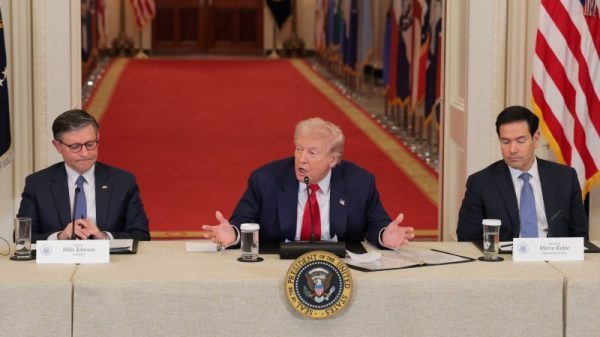

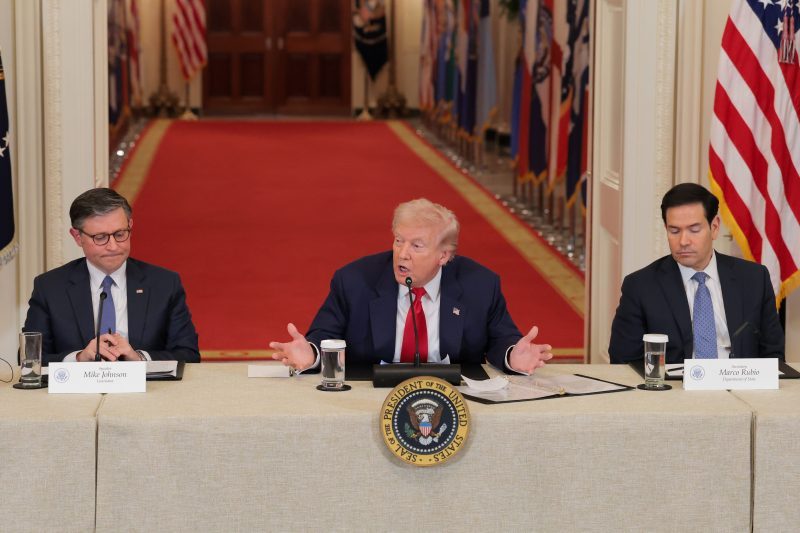
While the fate of college sports was being discussed at the White House with the biggest and best of sports and politics, the silent partner of the free-spending, free-falling framework was all but ignoring it.
ESPN, Fox, NBC and CBS — who combined to throw more than two billion dollars annually at college sports — were more interested in televising the NFL, college basketball, and talk and reality shows.
Don’t mess with Judge Judy, people.
Then again, what played out in Washington D.C. wasn’t much different from Judy’s reality show.
In between ideas (some good) from various participants, President Donald Trump — who, to his credit, somehow got all of these iconic individuals together — rambled on about “going back to the old way.”
“I’d like to go exactly back to what we had, and ram it through a court,” Trump said.
Excuse me, Mr. President? That’s what got us here in the first place.
It didn’t take long for the two-hour event to devolve into an airing of grievances, an opportunity for those 50-plus at the table to have their moment and their say. Until, that is, Trump had heard enough.
Right on cue, it became his show again.
He’s issuing a second executive order (the first accomplished nothing), one he says will return college sports to “common sense, and let colleges and players survive and everyone will be happy.”
Says the order will be done in a week, and that it may not hold up in court, but that, “you’re not going to get anything through (Congress).”
And with that, the most powerful man in the free world decided to punt.
Look, I don’t blame him. This thing is an unwieldy mess, and will get zero help from the only body on the planet that’s more tribally dysfunctional than the NCAA: Congress.
So let’s start with the non-negotiable of the process: No change in college sports begins without some form of antitrust protection for universities.
Which, of course, is like saying you want to protect the fox while he guards the hen house.
These universities have spent the past five years whining and complaining about a system they built, proclaiming over and over it’s unsustainable. Yet the damn thing keeps printing money. Lots of it.
But there has to be a starting point, so maybe this is it. Maybe, as Yankees president Randy Levine said, it begins with a two-year antitrust exemption to see if universities can implement an agreement. Or if they screw it up.
If it’s the latter, the whole process begins again from Step 1.
An antitrust exemption is incredibly university-friendly, allowing those with the money to set rules for those without. Or in this case for players, about 20% of it.
If universities receive the antitrust exemption, the first thing implemented is a return to restricting player movement. (That voice you just heard was Trump announcing, “Go back to the wonderful system.”)
SEC commissioner Greg Sankey says his conference wants one free transfer, and that’s it. You know, the old days.
Because free player movement, they insist, leads to structural and financial instability. Leads to an unwinding of the critical thread that makes college sports different and unique from the NFL. Like that matters now.
Forget that the ‘old days’ were awful for players, the financial equivalent of traversing a long, lonely desert — only to have someone eventually offer you a box of cotton balls to quench your thirst.
Which brings us to former coach Urban Meyer, he of the spotless reputation (both at Florida and Ohio State, and one disastrous year in the NFL). His gift to the day: “Get rid of collectives. That’s cheating!”
Cheating. Imagine that.
He then tried to explain the machinations of collectives and their cash is king mantra to Trump. Insert your joke here.
It’s all just so rich.
And speaking of money, very little was said about Cody Campbell’s idea to use the Sports Broadcasting Act of 1961, and allow conferences to pool their media rights and make more money — so everyone can share the wealth.
The SEC and Big Ten don’t want to pool television media rights, and they certainly don’t want a billionaire businessman — who just so happens to be the president of the Texas Tech Board of Regents — telling them how to financially structure their swindle. I mean, their system.
Early in the meeting, before it was every man and woman for themselves, a football coach said the most important thing of all. Not surprising that it was Alabama legend Nick Saban, who grew up in hardscrabble Monongah, W.V.
Saban’s dad, Big Nick, once took Saban to the coal mines after Little Nick lost his way one specific day as a teenager.
Get an education, Big Nick said with a threatening tone, or you’ll end up here.
Saban began his time at the Trump event by saying he’s just a football coach, and that he’s honored to be in the same room with everyone. Shoot, his big dilemma was always finding an answer to third-and-long.
Then he said it, the most pointed thing of the entire two-hour ordeal.
“What are the guiding principles for college athletics?” Saban said. “My goal as a coach was to help (players) create value for themselves in life, and prepare them for a future beyond athletics.”
Oh, wait, the players. Yeah, those at the center of this quagmire weren’t invited to the event. Why would they?
They currently have the law (and free player movement) on their side, thanks to a federal judge in ― wait for it ― West Virginia.
No need to punt on third-and-long.